Fleece Lined vs Satin Lined Beanies: Differences, Pros and Cons
Blog Catalog
Detailed Introduction of Two Lined Beanies
Comparison Between Two Lined Beanies
Daily Wearing & Maintenance Tips
Conclusion: Fleece Lined VS Satin Lined Beanie
Introduction
Beanies are not only essential winter wear to fight cold weather, but also combine practicality and fashion sense. Different inner lining materials directly affect wearing experience, warmth effect as well as comfort for hair and skin. Among all styles, fleece-lined and satin-lined beanies are the two most popular choices, yet many people struggle to pick between them—prioritizing ultimate warmth or hair-friendly comfort? This article fully analyzes their differences, pros and cons, along with daily wearing and maintenance tips to help you find your ideal beanie.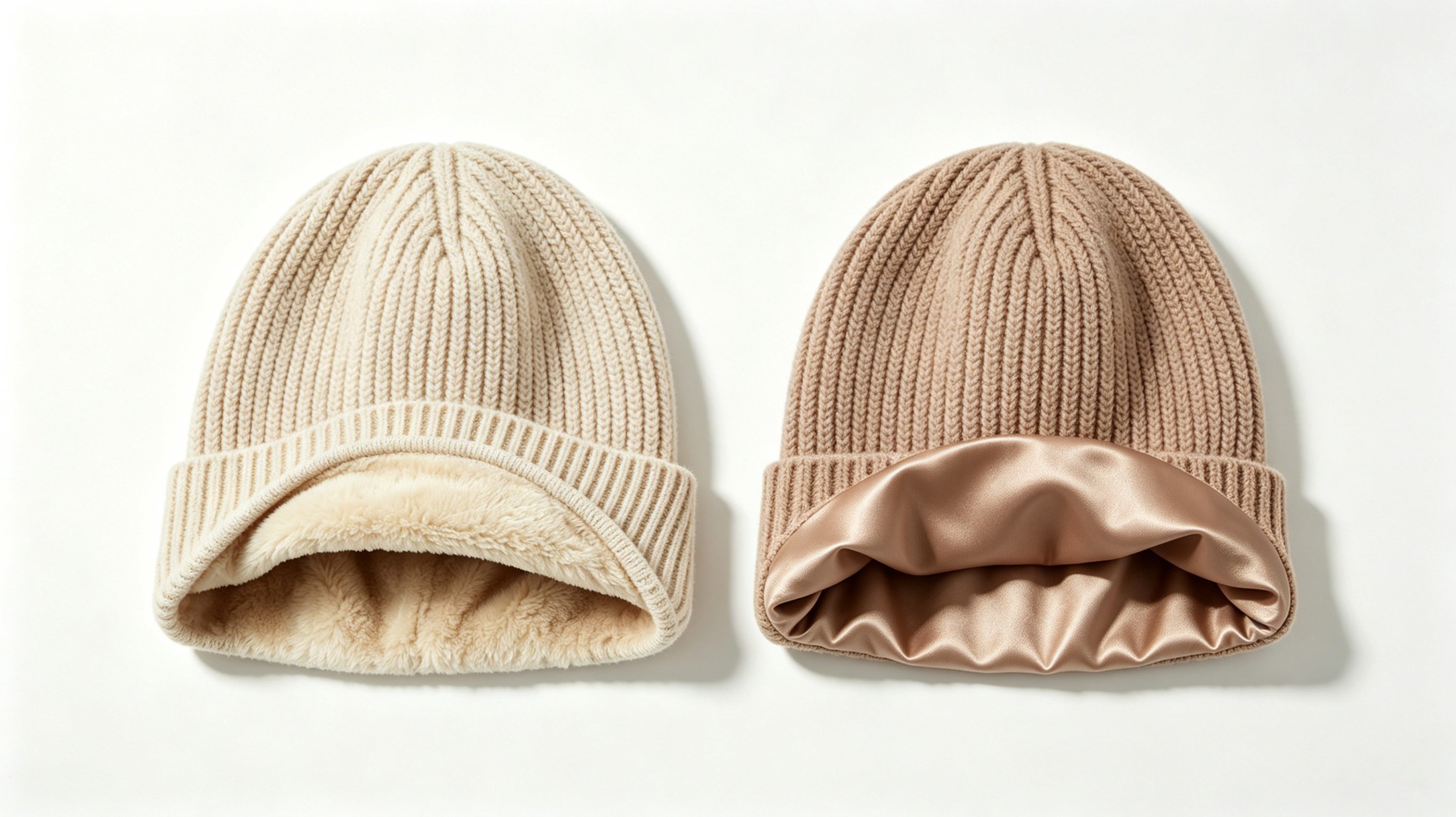
Detailed Introduction of Two Lined Beanies
What is a Fleece Lined Beanie
A fleece lined beanie features an inner lining made of fleece, a fluffy polyester fabric with soft, thick texture and excellent heat retention. Its outer layer is commonly knitted with wool, acrylic or cotton, balancing stylish appearance and practical warmth.
The fluffy structure traps air effectively to prevent body heat loss and block cold wind. It fits snugly around the head to deliver warm wrapping feeling, perfect for people living in cold areas, outdoor workers and those sensitive to cold. Fleece linings are divided into thin fleece for early winter and thick fleece for frigid midwinter.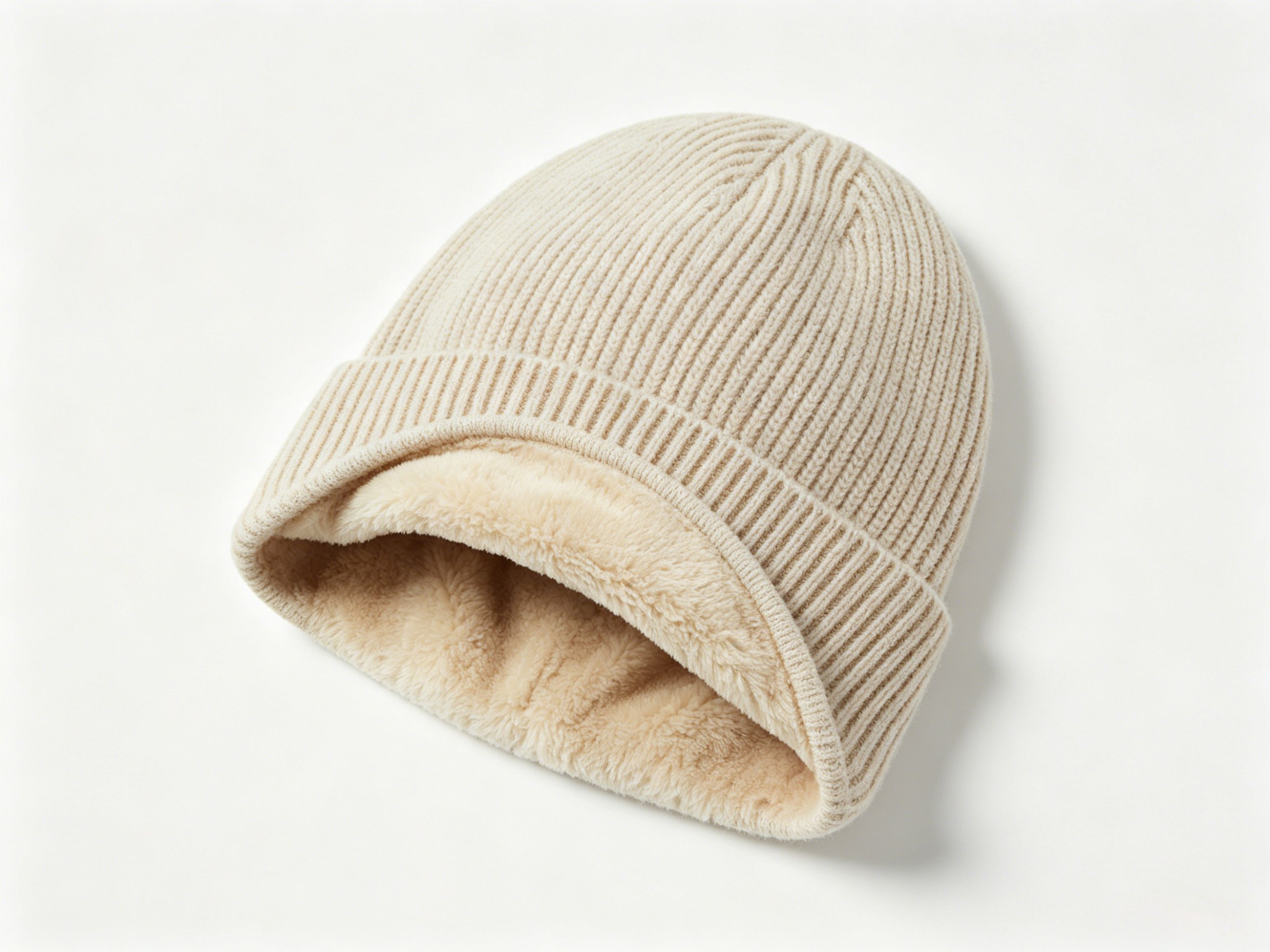
What is a Satin Lined Beanie
A satin lined beanie adopts smooth, delicate and glossy satin inner lining, mostly made of polyester satin or silk satin, matched with knitted outer layer for fashion and comfort. Its core merit lies in hair protection rather than extreme warmth.
Satin has ultra-low friction, which greatly reduces hair tangling, frizz and static electricity, especially ideal for curly hair, natural curls and dry damaged hair. It is skin-friendly, scalp-friendly and more breathable without stuffiness, suitable for seasons from early autumn to deep winter.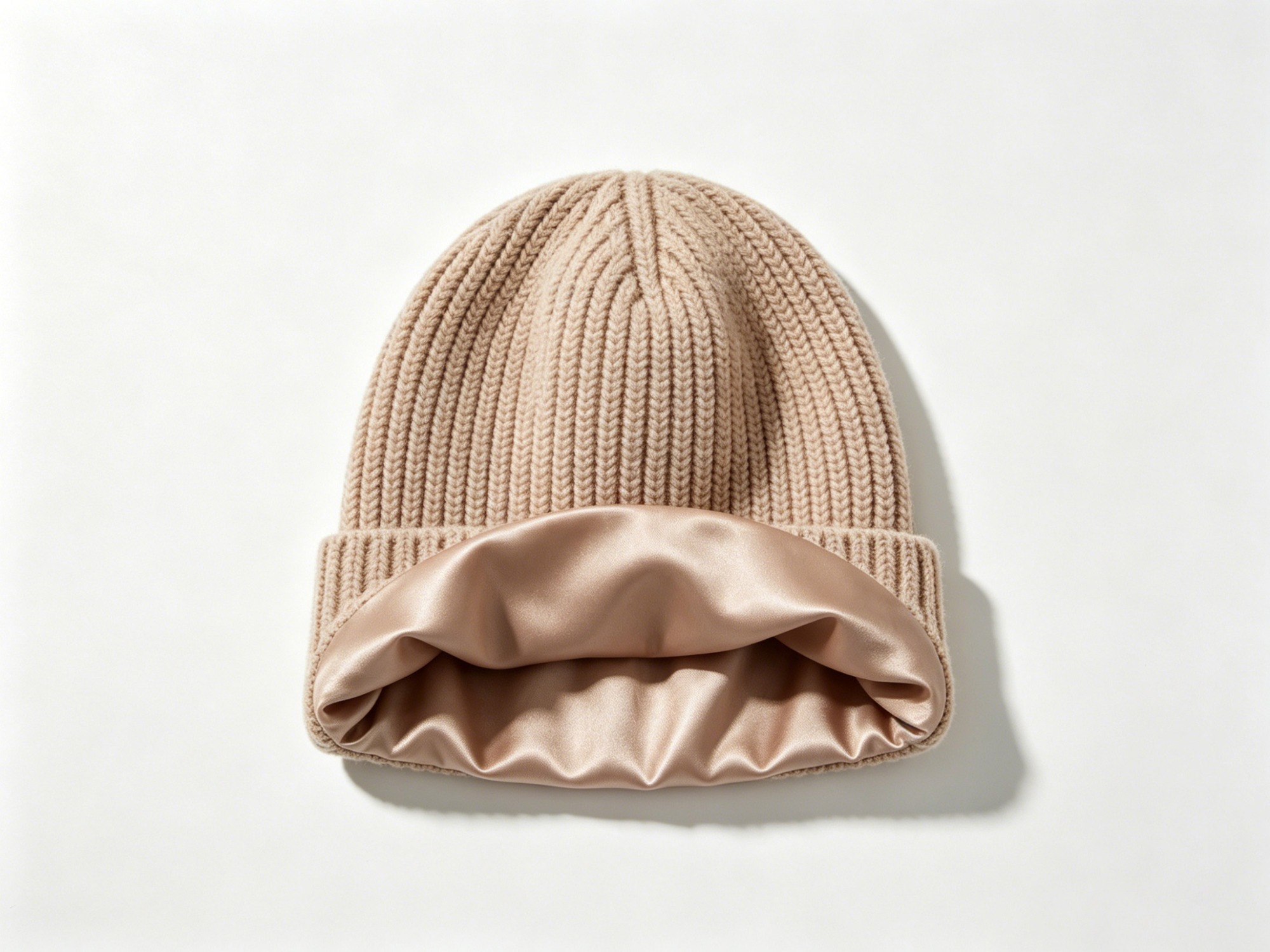
Comparison Between Two Lined Beanies
| Comparison Items | Fleece Lined Beanie | Satin Lined Beanie |
| Core Material | Polyester fleece | Polyester satin / silk satin |
| Warmth Level | Excellent, great heat retention for cold winter | Moderate, focuses on comfort and breathability |
| Wearing Touch | Thick, soft, fluffy with strong wrapping sense | Smooth, delicate and unrestrained |
| Influence on Hair | High friction, easy to cause static, frizz and tangles | Low friction, prevents static and frizz, protects hair |
| Air Permeability |
Poor, easy to feel stuffy and sweaty after long wear | Excellent, rarely stuffy |
| Suitable Seasons | Early winter to deep winter | Early autumn to deep winter |
| Target Crowds | Cold-intolerant people, outdoor workers, residents in cold regions | Curly hair crowd, people with damaged hair, comfort pursuers |
| Advantages | Super warm, cost-effective, durable | Hair-protective, breathable, skin-friendly, stylish look |
| Disadvantages | Poor air permeability, static-prone, easy matting after washing | Ordinary warmth, easy snagging, slightly higher price |
Daily Wearing & Maintenance Tips
Wearing Tips
Fleece Lined Beanie
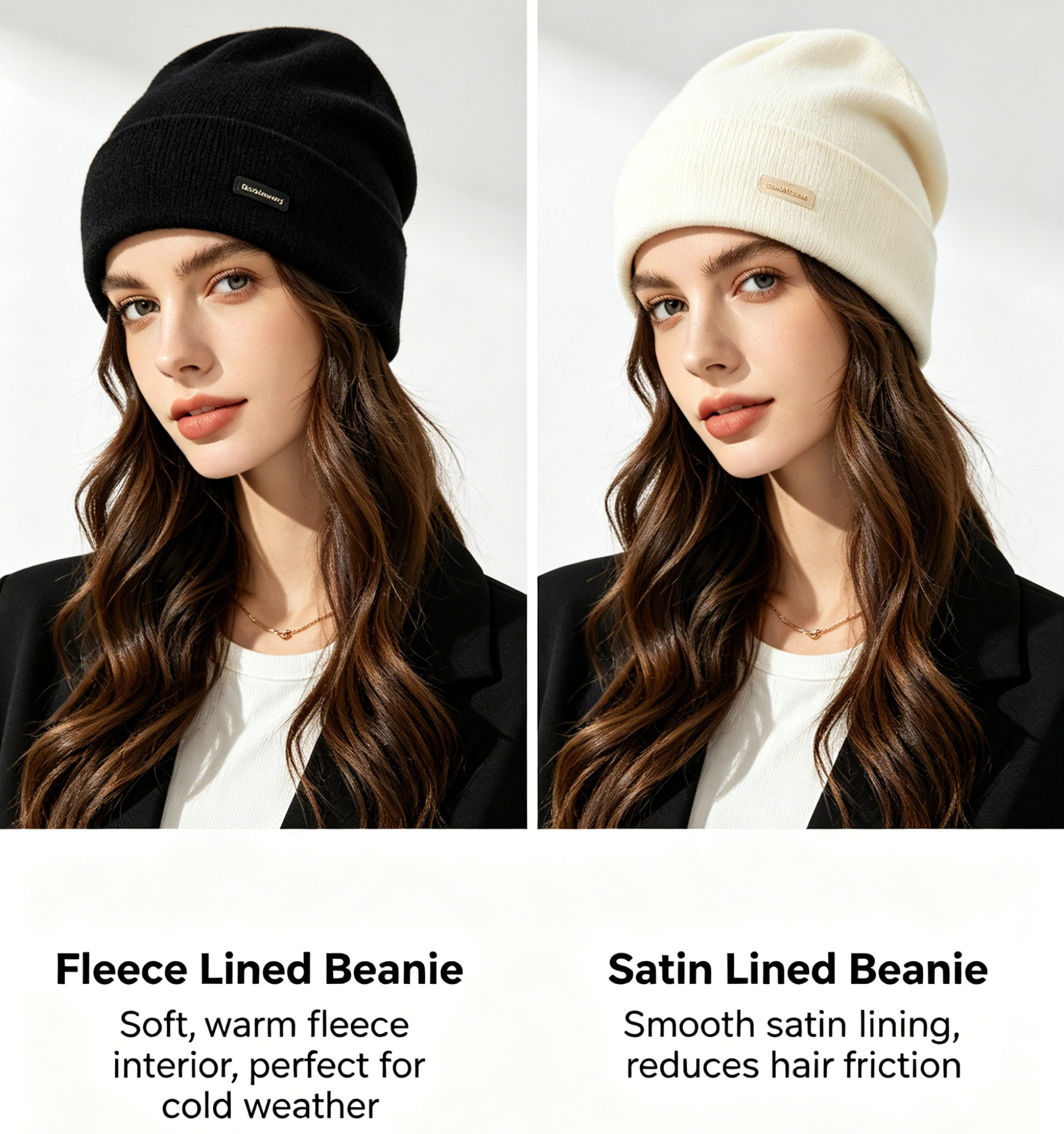
Pull the beanie down below your brow bone to cover forehead and ear tips for maximum warmth and frostbite prevention. Avoid wearing too tight to prevent scalp compression and poor blood circulation; too loose will weaken warmth. Adjust tightness according to head circumference. Matches well with down jackets and thick winter coats, casual and sporty in style.
Satin Lined Beanie
Comb hair neatly before wearing to avoid hair tangling with the lining. Wear it loosely to keep comfort and reduce hair friction. Highly versatile to match hoodies, windbreakers and down jackets, simple and elegant, great for commuting and dating.
Maintenance Tips
Fleece Lined Beanie
Hand wash is recommended with mild neutral detergent under 30℃ water temperature. Avoid alkaline detergent which causes fleece hardening and matting. For machine washing, put into laundry bag and choose gentle mode.Clean every 1 to 2 weeks to avoid odor and bacteria. Press gently to remove water instead of wringing. Dry naturally in ventilated shade away from direct sunlight to prevent yellowing and hardening. Pat lightly to restore fluffiness after drying; fold flat for storage.
Satin Lined Beanie
Prefer hand wash with cold water or warm water below 30℃ and special silk detergent. Rub gently to protect luster and prevent snagging. Machine wash only in laundry bag with gentle mode, separate from rough clothes.Clean every 2 to 3 weeks; excessive washing damages satin texture. Press to drain water instead of twisting, air dry in shade and avoid sun exposure to prevent fading. Fold neatly or use hat holder for storage, keep away from sharp objects to avoid snags.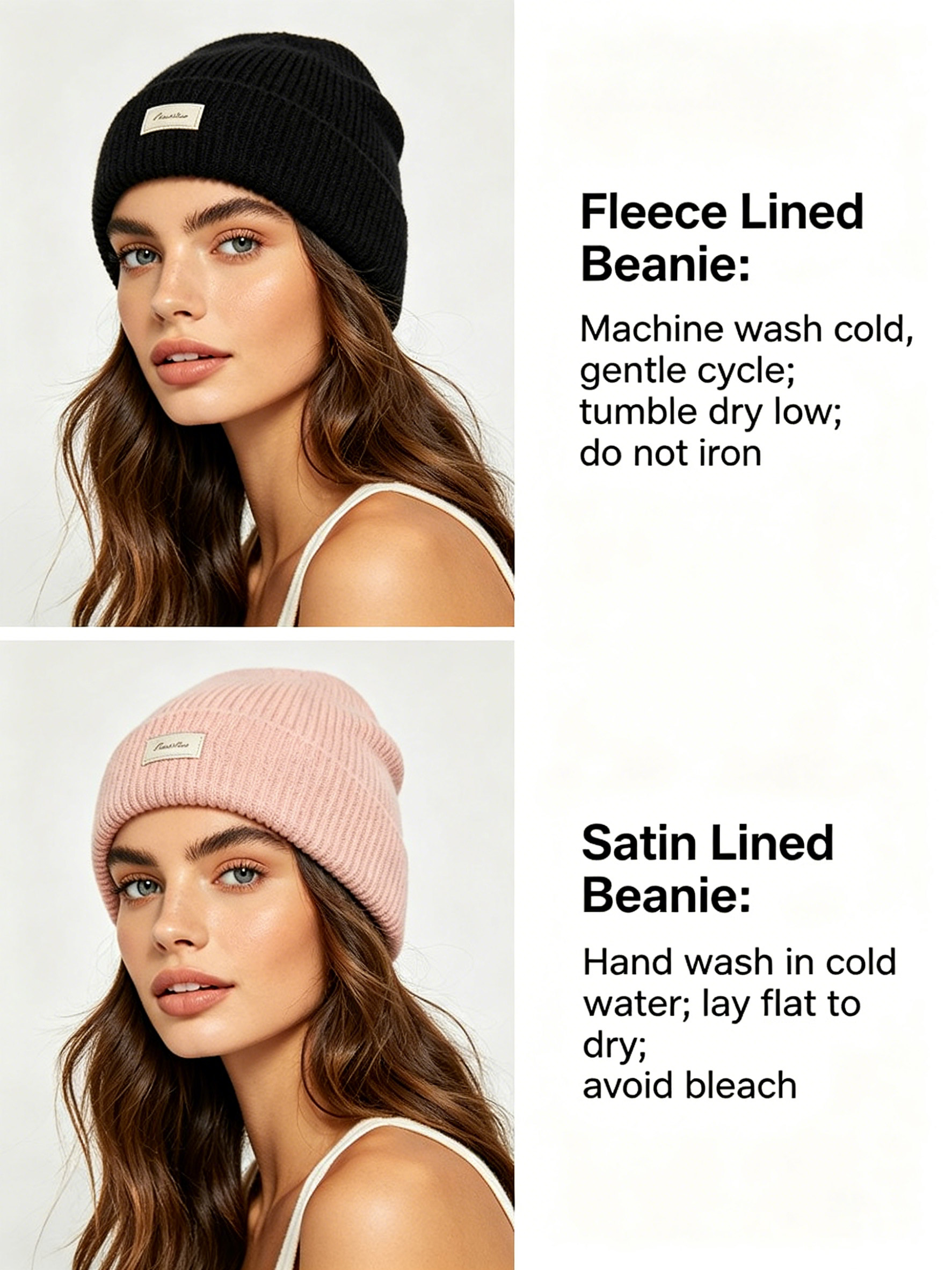
Conclusion: Fleece Lined VS Satin Lined Beanie
There is no absolute better one, only the more suitable one.
Choose fleece lined beanie if you prioritize warmth, live in cold areas, work outdoors or fear cold. It delivers powerful cold resistance, high cost performance and long service life, only short of good air permeability.
Choose satin lined beanie if you value hair care and breathability, especially for curly and damaged hair. It effectively reduces hair damage with wider seasonal adaptability and fashionable appearance, while its warmth is relatively limited.
You can also match them by seasons: satin lined for mild early winter, fleece lined for freezing deep winter. Double-lined beanies with both fleece and satin are perfect choices to balance warmth and hair protection.
FAQ
Q: Can fleece lined beanies be worn in mild winter?
A: Yes, but it is recommended to choose thin fleece lined styles. Thin fleece can provide moderate warmth without being too stuffy, which is suitable for mild winter with temperatures around 0-10℃. However, if the temperature is higher than 10℃, it may feel stuffy to wear for a long time.
Q: Will satin lined beanies slip off easily?
A: Generally not. Most satin lined beanies are designed with a proper fit, and the outer knit fabric has a certain friction, which can prevent slipping. If you have a small head circumference, you can choose styles with drawstrings to adjust the tightness, or choose beanies with a slightly smaller size.
Q: Is satin lined beanie suitable for people with sensitive scalps?
A: Yes. Satin fabric is soft and skin-friendly, with low friction, which will not irritate the sensitive scalp. It is even more suitable for people with sensitive scalps compared to fleece lined beanies (some people may be sensitive to polyester fleece).
Q: How to restore the fluffiness of fleece lined beanies after washing?
A: After washing, gently press to absorb water (do not wring), lay it flat in a well-ventilated place to dry naturally. After drying, gently pat the fleece with your hands or use a hair dryer (low temperature mode) to blow the fleece, which can restore its fluffiness. Avoid high-temperature drying or ironing, which will damage the fleece.
Q: Are satin lined beanies easy to hook?
A: Satin fabric is relatively delicate and may be hooked if it comes into contact with sharp objects (such as nails, zippers, etc.). When wearing and storing, avoid contact with sharp objects, and wash separately from rough clothes to reduce the risk of hooking. If there is a small hook, you can gently pull the thread back to the inner side with a needle to avoid further damage.
Q: Which one is more durable, fleece lined or satin lined beanies?
A: Generally, fleece lined beanies are more durable. Fleece fabric is wear-resistant and not easy to be damaged, while satin fabric is delicate and easy to hook or fade if not properly maintained. However, as long as you follow the correct washing and maintenance methods, both can be used for a long time.