GRS vs RCS Certification: Which One to Choose for Recycled Fiber Beanies
Catalog
Introduction
Ⅰ.Introduction to the Two Certifications
1.GRS (Global Recycled Standard)
2.RCS (Recycled Claim Standard)
Ⅱ.Core Comparison Chart
Ⅲ.Practical Application Scenarios: How to Use the Two Certifications
1.Application Scenarios for GRS Certification
2. Application Scenarios for RCS Certification
Ⅳ.Which Certification Is Better?
Ⅴ.Conclusion
Ⅵ.FAQ
Introduction
Eco-friendliness and sustainability have become major trends across the global apparel industry. Beanies and knit hats made from recycled yarns are increasingly popular among overseas buyers. When it comes to certifications for recycled textiles, GRS and RCS are the two most widely recognized standards. Many purchasers and suppliers often confuse them: some believe the two certifications serve the same purpose, while others blindly opt for higher-standard certifications, leading to unnecessary cost increases.
In fact, GRS and RCS differ greatly in product positioning, audit requirements and application scenarios. Choosing the right certification helps meet clients’ demands, boost product competitiveness and keep production costs under control. Combining the features of knit hats, this article gives a full breakdown of the two recycled standards, helping you figure out which certification suits your products best.
Ⅰ.Introduction to the Two Certifications
1.GRS (Global Recycled Standard)
The full name of GRS is Global Recycled Standard. It is the most widely recognized comprehensive certification for recycled textiles worldwide, featuring full supply chain control and high-standard compliance. This certification requires products to contain no less than 50% recycled raw materials. It not only verifies whether the materials are recycled, but also traces the entire supply chain. Complete documentation must be provided for every procedure, from raw material recovery, yarn spinning, weaving, dyeing and finishing to finished product delivery.
Beyond recycled content requirements, GRS also enforces strict regulations. It restricts the use of harmful substances such as formaldehyde, heavy metals and azo dyes, regulates factory wastewater and exhaust emissions, and audits labor rights and production safety systems. For knit beanies, GRS certification is mostly required for mid-to-high-end branded styles, supermarket orders and eco-friendly luxury collections made from recycled polyester, recycled acrylic, recycled wool and other materials. It is also the most favored recycled certification by mainstream brands and major retailers across Europe and America.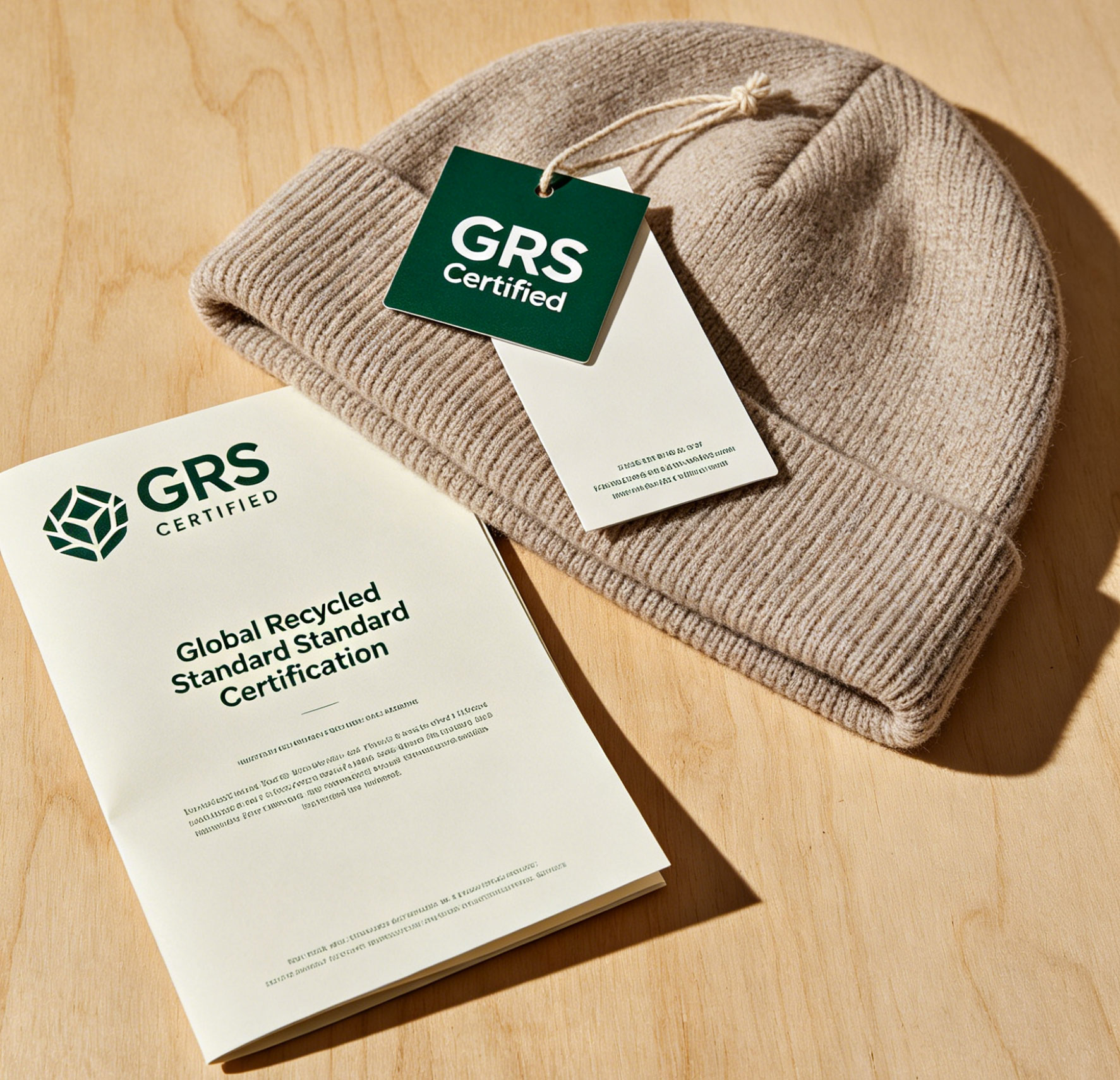
2.RCS (Recycled Claim Standard)
RCS stands for Recycled Claim Standard. It is a lightweight certification focusing solely on verifying the recycled material content of products. With a much lower entry threshold, products qualify for application as long as they contain at least 5% recycled raw materials. The auditing process is simple, only checking the proportion of recycled ingredients. It does not include additional assessments on environmental emissions, chemical control and factory labor standards, nor does it mandate full supply chain traceability.
RCS features low certification costs, short processing cycles and flexible minimum order quantities. It is ideal for affordable bulk beanies, promotional gift hats, cross-border retail products and small and medium-sized distribution orders. Many foreign trade suppliers and small wholesalers that focus on cost performance prefer RCS to mark the recycled features of their goods.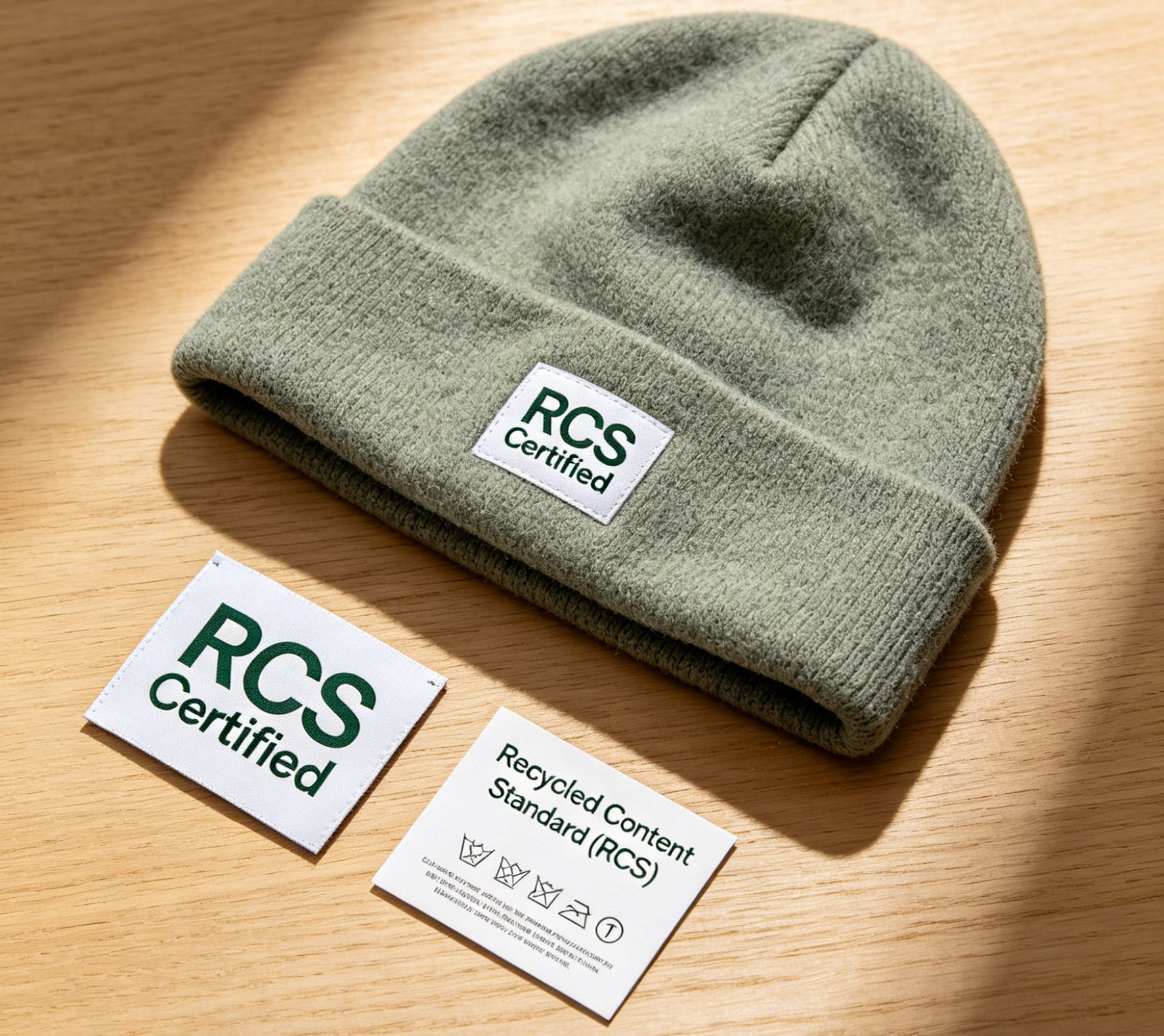
Ⅱ.Core Comparison Chart
| Comparison Items | GRS | RCS |
| Minimum Recycled Material Content | ≥ 50% | ≥ 5% |
| Main Audit Contents | Recycled content + Full supply chain traceability + Chemical control + Environmental emission management + Labor standards | Only verification of recycled material content |
| Application Difficulty | High with strict audits and complicated procedures | Low with simple procedures and high pass rate |
| Certification Cost | Relatively high | Low |
| Certificate Validity | 1 year, annual audit required | 1 year, annual audit required |
| Applicable Product Positioning | Mid-to-high-end branded styles, premium beanies, supermarket orders | Cost-effective bulk styles, promotional hats, cross-border retail beanies |
| Market Recognition | Highly recognized by top European & American brands and major retailers | Widely accepted by small and medium-sized buyers and general whol |
Ⅲ.Practical Application Scenarios: How to Use the Two Certifications
1.Application Scenarios for GRS Certification
1.1 Cooperate with well-known European and American brands, offline supermarket chains and eco-focused brands that require full supply chain compliance for recycled products.
1.2 Position products with premium eco-friendly features to increase profit margins and build differentiated competitiveness for beanies.
1.3 Serve long-term regular clients with large order volumes who are willing to cover extra costs for certification and recycled raw materials.
1.4 Sell elaborately crafted beanies with combined certifications such as Oeko-Tex, targeting high-end foreign trade orders.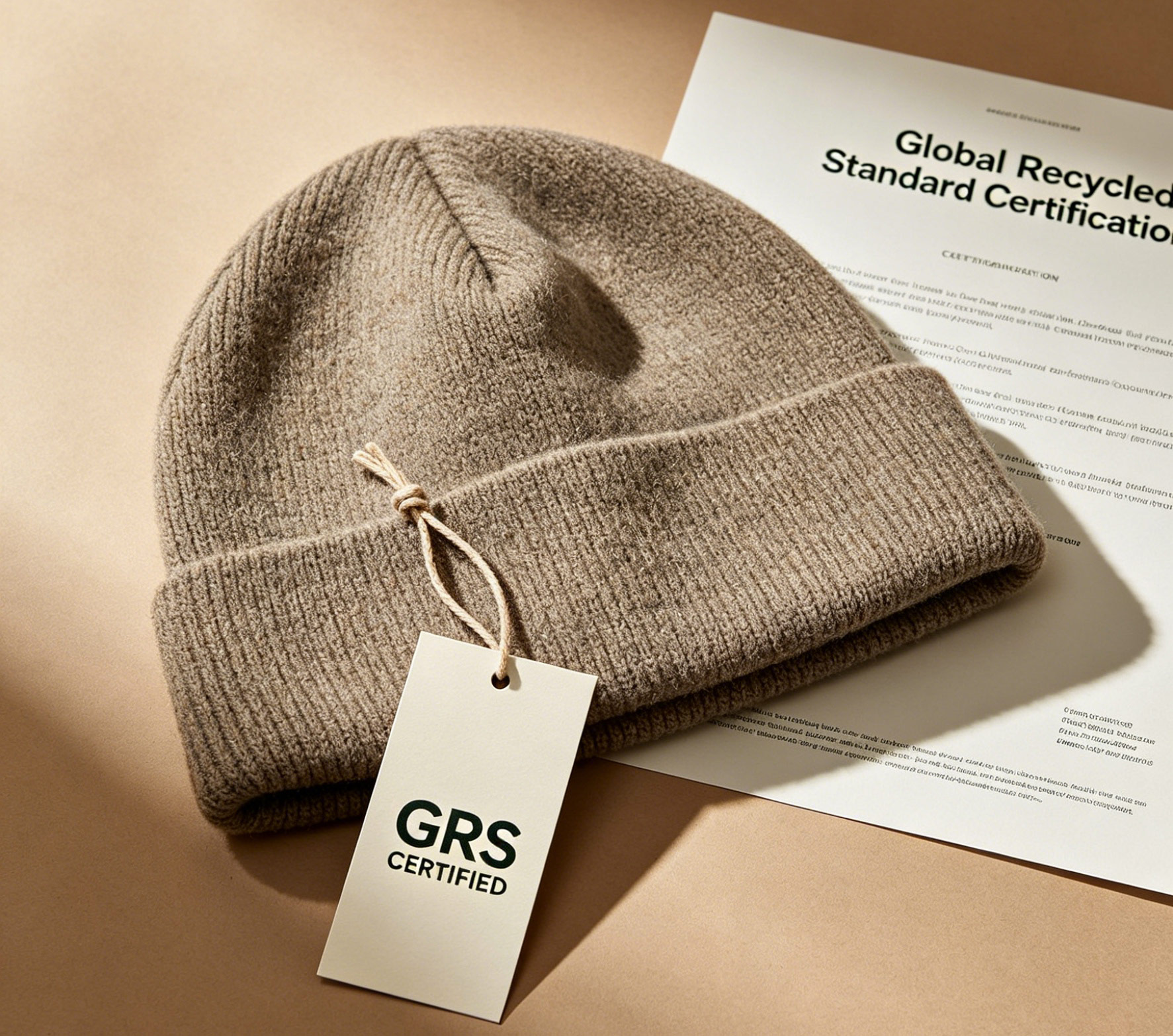
2. Application Scenarios for RCS Certification
2.1 Supply products for cross-border e-commerce, street vendors and promotional gift hats, with priorities on large sales volume and cost control.
2.2 Clients only require products to be marked as "recycled materials", with no additional requirements for environmental compliance or factory audits.
2.3 Process small-batch orders and trial orders without excessive investment in certification fees.
2.4 Provide affordable trendy beanies and basic skull caps focusing on cost performance.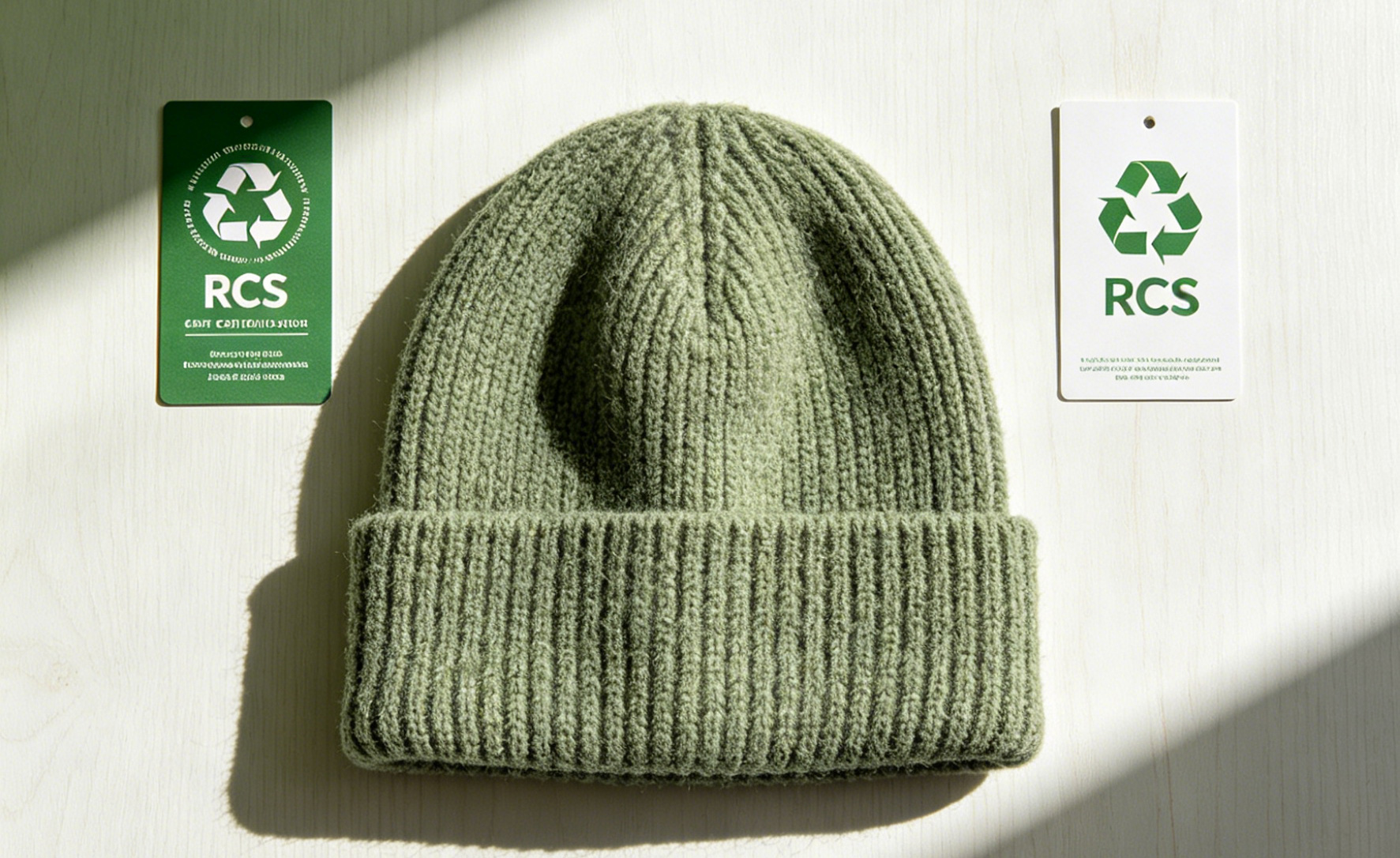
Ⅳ.Which Certification Is Better?
There is no absolute distinction between good and bad. The best choice is the one that fits your orders and customer groups.
If you mainly work with European and American brands and large purchasers, focus on the high-end market, and pursue long-term brand cooperation and higher product profit margins, GRS is your top pick. It serves as a key advantage for winning orders and a mandatory requirement for premium clients.
If your business centers on basic and bulk beanies, serving small and medium-sized wholesalers, cross-border retail orders and gift orders with limited budgets and a focus on cost efficiency, RCS is a more practical option. It allows you to label products as recycled without driving up production costs and quotations significantly.
Many suppliers adopt a combined strategy: apply GRS to high-end product lines and RCS to affordable ranges, so as to cater to demands from customers at all levels.
Ⅴ.Conclusion
GRS and RCS are two leading certifications for beanies crafted from recycled materials. While both relate to recycled raw materials, they have vastly different standards and market positioning. GRS is a comprehensive, high-standard certification with strict requirements and higher costs, tailored for high-end brand orders. RCS is a simplified certification for recycled content, featuring low entry barriers and excellent cost efficiency, which works perfectly for mass-market bulk orders.
Before order confirmation and production, define your target markets, client types and product positioning to choose the right certification. This will help you avoid product rejections for non-compliance and prevent cost losses from applying for advanced certifications blindly. For suppliers of recycled fiber beanies, mastering knowledge of these two certifications is essential for successful foreign trade in eco-friendly product lines.
Ⅵ.FAQ
Q1: Can a single beanie be certified with both GRS and RCS?
A: There is no need for dual certification. Products that meet GRS standards have a recycled material content well above the RCS requirement. You may mark the recycled feature directly without applying for RCS separately.
Q2: Can I apply for GRS if the recycled material content is exactly 40%?
A: No. GRS mandates a minimum recycled content of 50%. Products failing to meet this standard can only apply for RCS.
Q3: How long is the certification valid? Do I need to reapply after expiration?
A: Both certificates are valid for one year. You need to complete the annual audit with the certification body before expiry to renew the certificate.
Q4: Will accessories such as prints, embroidery and leather labels affect GRS and RCS certification?
A: RCS only verifies the proportion of recycled materials, so accessories have almost no impact. For GRS, chemicals in dyes, inks and accessories will be fully inspected. Complex craftsmanship will increase the difficulty of GRS testing.
Q5: Which certification do customers in South America, Africa and other regions usually require?
A: Strict high-standard certifications are not mandatory in most of these markets. RCS is sufficient for regular recycled beanies. If you receive orders from major local branded clients, you may upgrade to GRS as requested.